Photo: Kerry Kehoe
Indigenous Cultures & Arts • Native American/First Nations Organizations • Museums & Archives • Art Galleries • Magazines • Universities & Colleges • Graphic Design Education • Nonprofits • Native Advocacy Groups
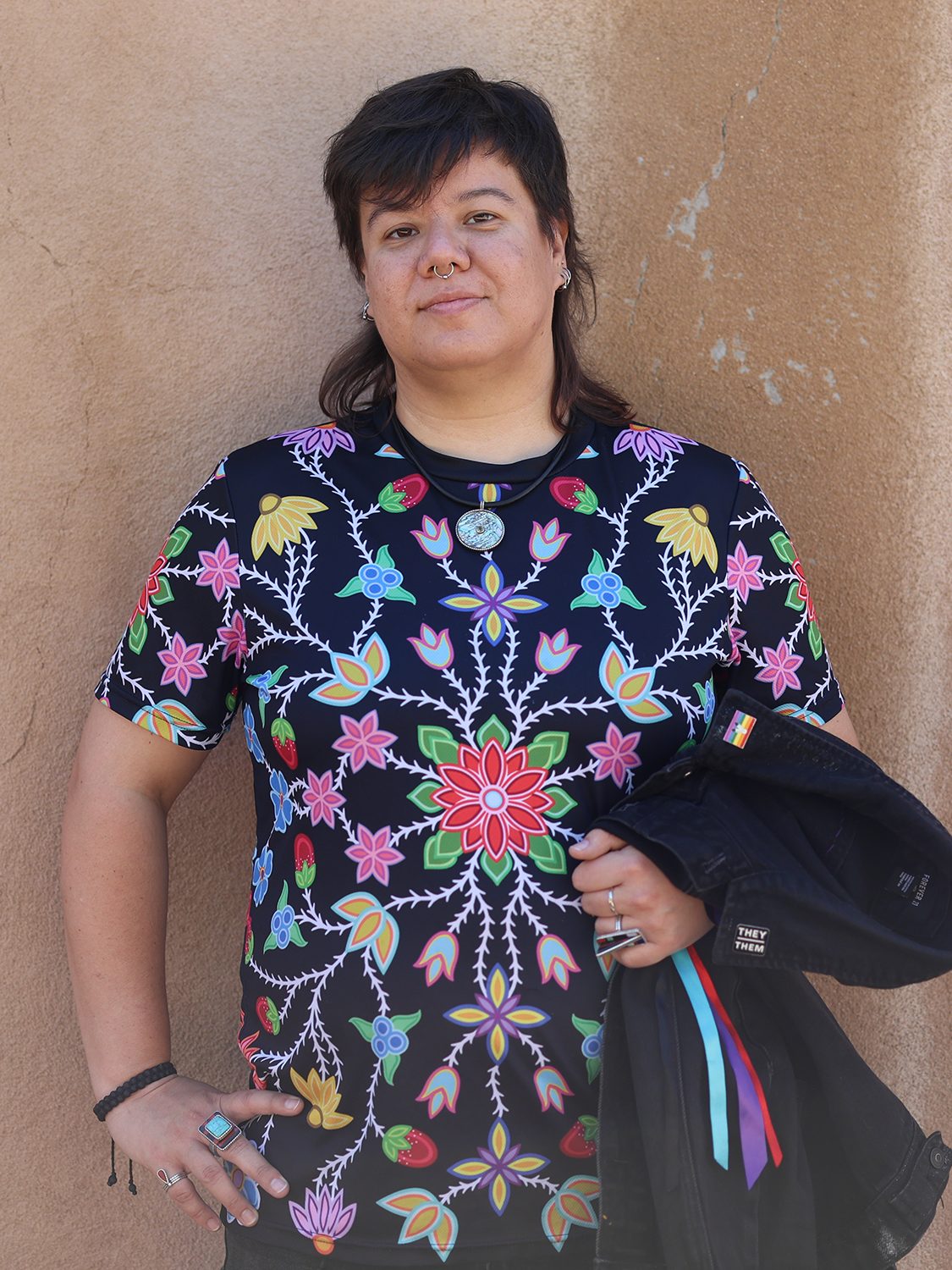
I am a member of the Chippewas of Rama First Nation—Toronto-born, USA-raised, and living in Santa Fe, New Mexico, USA. My name is Neebinnaukzhik Southall. Neebinnaukzhik means “Summer Evening” in the Anishinaabe language. You may call me “Neebin.” I am two-spirit—my pronouns are they/them. Neebin Studios is my small creative business. I am a graphic designer, illustrator, artist, photographer, writer, editor, and speaker. I prioritize meaningful projects benefiting Native peoples.
DEI in Design, Every Day
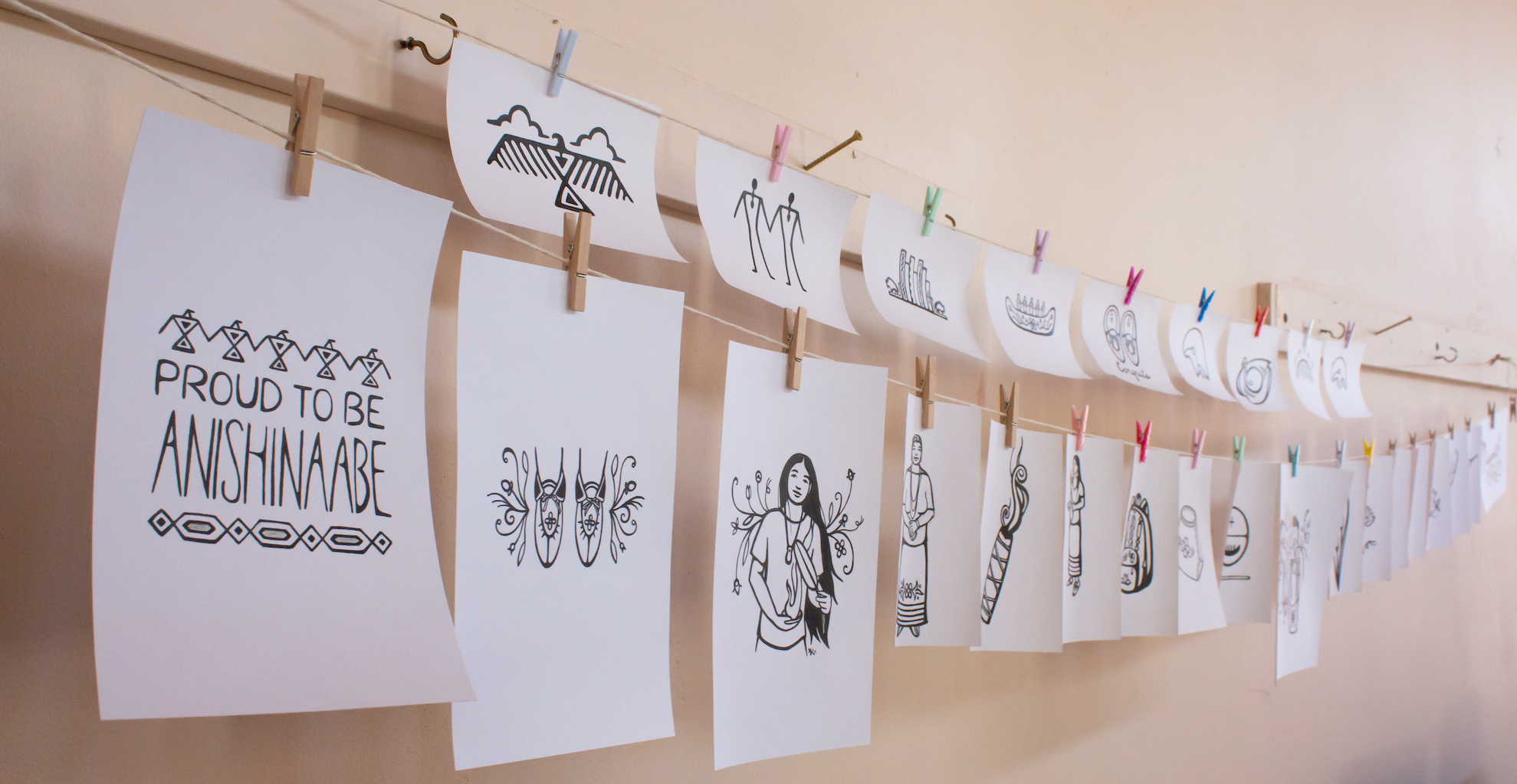
I create for cultural and arts organizations, museums, educational institutions, magazines, small businesses, groups, and individuals aligning with my social and political values. I do publication design, layout design, exhibition signage, ads, branding, logos, illustrations, and more. I bring years of experience in Intertribal, Tribal, and multicultural contexts to my work, having worked within the Native art world since 2012. Diversity, Equity, and Inclusion every day.
Clients have included Astraea Foundation, Businesses for Conservation and Climate Action, the Center of Southwest Studies at Fort Lewis College, Coalition to Stop Violence Against Native Women, Creative Mornings, CU Boulder, Detroit Institute of Arts, First American Art Magazine, First Americans Museum, Millicent Rogers Museum, Missouri State University School of the Arts, NACA Inspired Schools Network, National Indigenous Women’s Resource Center, the National Museum of the American Indian (via SWAIA/the Native Cinema Showcase), New Mexico Department of Affairs, Ojibwe.net, Poetry Magazine, Racing Magpie, Ralph T. Coe Center for the Arts, Santa Fe Art Institute, the School for Advanced Research, the Southwestern Association for Indian Arts (SWAIA), Three Sisters Collective, Tohono O’odham Community Action/Native Foodways Magazine, and the Wheelwright Museum of the American Indian, among others.
Native Design & Arts Advocacy
My arts and design writing typically covers Indigenous North American art, graphic design, and fashion design. I have written for AIGA, First American Art Magazine, Hyperallergic, Letterform Archive, The Peabody Essex Museum’s Connections member magazine, the Southwestern Association for Indian Arts, the Santa Fean’s Native Arts magazine, and the Santa Fe New Mexican’s Indian Market and Legacy magazines, among others.
I have raised the profile of Native North American graphic designers through my advocacy work. I have maintained a list of Indigenous graphic designers at the Native Graphic Design Project for 13+ years. I was the first person to write about historic Ho-Chunk illustrator and designer Angel DeCora (1871–1919) in a graphic design context in 2016 for AIGA’s Design Journeys website, bridging information from Native American art history to the mainstream graphic design world, ultimately shifting the design canon. Since then, major graphic design publications have included Angel DeCora in their lineups, including Extra Bold: A Feminist, Inclusive, Anti-racist, Nonbinary Field Guide for Graphic Designers (2021) and Meggs’ History of Graphic Design, Seventh Edition (2025). In 2022, I co-curated Ezhishin, the first conference centering Native North American typography, hosted online by the Type Directors Club. Ezhishin was featured in articles by PRINT, It’s Nice That, and Alphabettes.
Editing
My editing work is specialized within Native art and design. I served as a developmental editor, copy editor, and proofreader on Brian Johnson’s upcoming Designed to Be Red: Native American and Indigenous Graphic Works (DelMonico Books, 2026), the first major publication dedicated to Native graphic design, representing work by individuals from over 80 Tribes and Nations. I was a copy editor for Breaking Ground: Art & Activism in Indigenous Taiwan (IAIA Museum of Contemporary Native Arts, 2025); The Moving Land: 60 Years of Art by Linda Lomahaftewa (IAIA Museum of Contemporary Native Arts, upcoming release); Experimental exPRESSion: Printmaking @ IAIA, 1963–1980 (IAIA Museum of Contemporary Native Arts, upcoming release); and Mary Wheelwright: Her Book (Wheelwright Museum of the American Indian, 2016).